LiveFreely Launches in Japan: Scaling Proactive Aging™ and Wellness

Introduction: An Inflection Point in Global Aging
A demographic shift is occurring in countries worldwide – aging populations are outgrowing their healthcare infrastructure.
Nowhere is this challenge more visible and urgent than in Japan.
Japan has the oldest population in the world, and it has had for decades due to low birth rates and high life expectancy. According to the Japan Times, 36.2 million people in Japan are aged 65 or older, representing a record 29.4% of the total population that is projected to rise to 34.8% by 2040. In Sep. 2025, Japan reported having nearly 100,000 people aged 100+, breaking its own record for the 55th year in a row.
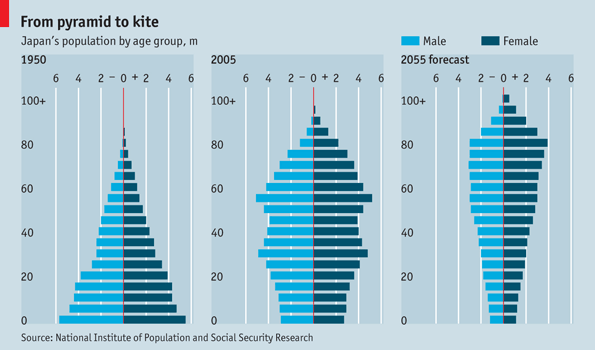
Despite a continuous increase in lifespan, high costs of care and high health risks in rapidly aging countries remain pressing concerns. Medical examinations, continuous caregiving, operational costs, and treatment plans burden health plans, healthcare workers, patients, and families. Health issues that develop slowly over time and sudden fatal accidents such as falls remain lurking risks even for healthy elderly. In fact, falls are a leading cause of accidental death among adults ages 65+ in Japan. Japan’s narrative offers a preview of what many countries, including the United States, will face in the near future. Japan is not only a critical market, but a proving ground for the future of aging and wellness innovation.
LiveFreely’s expansion into Japan is a defining step in our mission to shift healthcare from reactive intervention to Proactive Aging™ – a model grounded in early risk prediction, continuous health monitoring, syncing real-time data across circles of care, and preventive technology. In launching in Japan, we are not just entering a new geography; we are the trailblazers of advancing a strategy to redefine how societies support aging populations.
LiveFreely’s Strategic Vision
One of the most pressing consequences of Japan’s aging population is the growing incidence of falls, the leading cause of accidental death and serious injury among adults aged 65 and older in Japan. The consequences of a single fall multiply – hospitalization, loss of independence, high costs of long-term care, and increased mortality risk – and cause immense strains on patients, families, caregivers, and healthcare systems.
Falls are often framed as accidental, unpredictable events. In reality, falls are rarely sudden or random events. Research shows that subtle changes in one’s gait patterns often precede falls by months or even years. The challenge has never been a lack of scientific insight – it has been the absence of scalable, effective platforms capable of translating gait data into risk prediction and prevention analysis.
Japan presents a convergence of need and opportunity:
- A rapidly aging population
- A national focus on preventative care and aging-in-place
- High institutional demand for and reception of aging technologies
LiveFreely’s entrance into the Japan market aligns directly with our vision: to bring our AI-powered digital health platform, BUDDY, to help people maintain independence, mobility, and a peace of mind as they age.
Need-Finding: Listening Before Scaling
LiveFreely’s expansion into Japan began with need-finding, not assumptions.
We carried out structured need-finding research across key stakeholders in Japan, including senior care facilities, healthcare professionals, the elderly, and institutional partners. The goal was to identify specific pain points, barriers, and friction points across every segment of the healthcare system experienced to tailor and enhance LiveFreely’s BUDDY platform to be the most comprehensive, cost-efficient, and effective solution after its rollout.
Several themes emerged from our research:
- Systems Are Reactive by Design
Providers acknowledged that existing workflows prioritize acute events over continuous risk assessment. Preventative insights, when available, are often fragmented or inaccessible across care settings.
- Independence and Mobility are Highly Valued
Older adults expressed a strong commitment to remaining independent and exercising on a regular basis, though few mentioned paying attention to a change in their gait pattern as an early warning sign for health issues.
- A Gap in Productivity Potential in Current Systems
It was impressive how much of the administrative operations were conducted on paper and pen, including daily logs and manual data inputs, a tedious and costly approach. The issue was not a rejection of technology, but rather the lack of affordable, efficient solutions that can be easily integrated into existing systems. BUDDY by LiveFreely will easily fill this gap by automating tedious tasks and syncing real-time data across the system in compliance with the APPI.
These findings reinforced a core insight: the greatest unmet need is not detection after an event, but prediction before it occurs.
This need-finding work directly informed how LiveFreely designed its Japan expansion – anchored in subtle, continuous, and preventative intelligence rather than episodic monitoring.
How We’re Doing It: Planning, Logistics, and Technology
LiveFreely’s Japan launch will center on the rollout of the BUDDY platform.
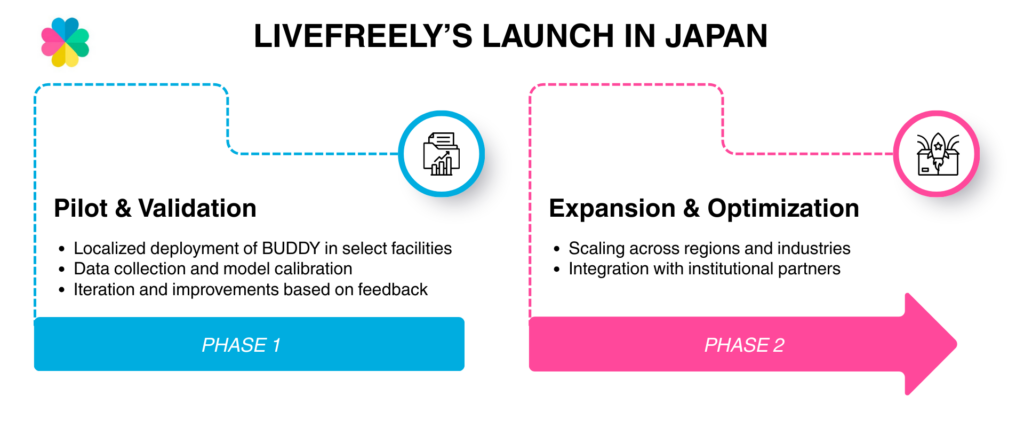
BUDDY by LiveFreely is not a single device or alert system, but AI-powered digital health platform that continuously monitors, predicts, and prevents accidents before they escalate, while generating real-time analytics and insights for healthcare providers. We will deploy the BUDDY platform to patients in senior care facilities, fans of local sports teams, and people in the general public. The goal is both localized and systematic improvements in senior and younger populations across Japan to surface health risks early and achieve Proactive AgingTM at scale.
BUDDY Overview
BUDDY’s core features include AI and machine learning technology to predict and detect subtle deviations that are often missed or dismissed. This reframes senior care from reactive responses to proactive interventions.
BUDDY integrates advanced sensing, machine learning, and behavioral analytics to monitor health indicators in real time, allowing for early risk prediction and prevention. Features include the continuous tracking of gait patterns, fitness and vitals, irregular health patterns, wandering, medication adherence, and mental health, as well as connection to local national emergency alert system J-Alert.
BUDDY provides gait analysis, which is technology using data from gait monitoring to predict and prevent falls before they may occur. Our gait analysis algorithm synthesizes mobility data including but not limited to double support time, walking asymmetry, and walking speed to make accurate predictions, with over 30,000 simulated falls used in our training data.
BUDDY by LiveFreely moves beyond belated, reactive detection to early, proactive intervention.
Why Gait Analysis Matters
Gait is the pattern, manner, or style of walking, and it is a complex motor-cognitive task that requires the seamless integration of the nervous and cardiovascular systems.
Research has demonstrated that gait is predictive of several health indicators. A 2025 study published in Frontiers in Neurology found gait correlated with:
- Increased Fall Risk
- Walking Speed: Every 1 standard deviation decrease in speed increases fall risk by 33%.
- Stride Length: Each 1cm decrease is associated with 21% higher odds of a fall.
- Gait Symmetry: A mere 1-unit decrease in symmetry can lead to a 28% increase in fall probability.
- Cognitive Decline and Mild Cognitive Impairment (MCI): Gait speed and variability are often affected years before memory loss becomes apparent. The motor-cognitive link means that when the brain struggles to process information, the deviation is first reflected in walking patterns.
- Neurological Disorders: Conditions like Parkinson’s or Dementia with Lewy Bodies (DLB) present unique “gait signatures,” and identifying these signatures for each individual early allows for staging biomarkers that were previously invisible to the naked eye.
In addition, clinical research published in Journal of Aging and Physical Activity designates walking speed as the “6th Vital Sign,” proving it is a valid and sensitive measure for signaling functional decline early.
- In older adults, gait speed below specific ‘cut-off’ values, typically under 0.8 meters per second, serves as a primary predictor of frailty, hospitalization, and institutionalization.
Gait analysis is a powerful tool that provides insight into an individual’s current health status and future health risks.
The challenge? Capturing these signals accurately and continuously.
BUDDY by LiveFreelyhas moved beyond basic monitoring to embed accurate, continuous gait analysis through advanced technologies and algorithms – bridging the gap between raw data and the predictive, preventive standard of Proactive AgingTM.
BUDDY’s Differentiators
- AI-powered gait analysis and risk analysis using synthesized health data – from mobility patterns to medication effects – to predict and prevent risks including falls
- Continuous, effortless monitoring that operates in the background as one engages in their daily activities
- Real-time analytics synced across the circle of care, delivering actionable recommendations and insights to individuals, caregivers, family, facility staff, and/or healthcare providers in a timely manner
Pilot Programs and Proof of Concept (POC)
LiveFreely’s strategic expansion into Japan is built around pilot programs and POCs.
- 2025 U.S. Traction and Results:
- Number Lives: 120,000+
- Number Insurances: 2
- Number Employee Benefit Plans: 5
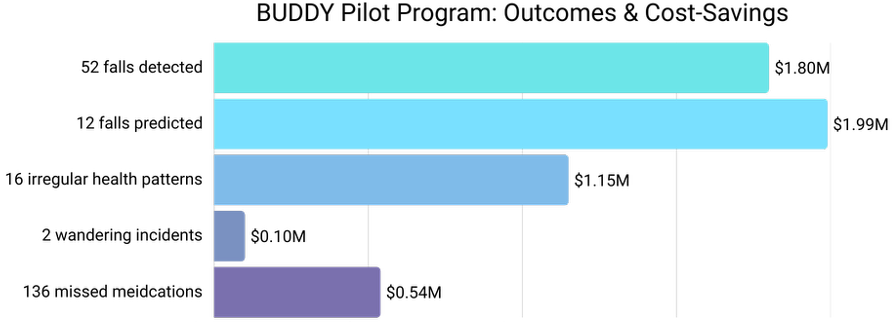
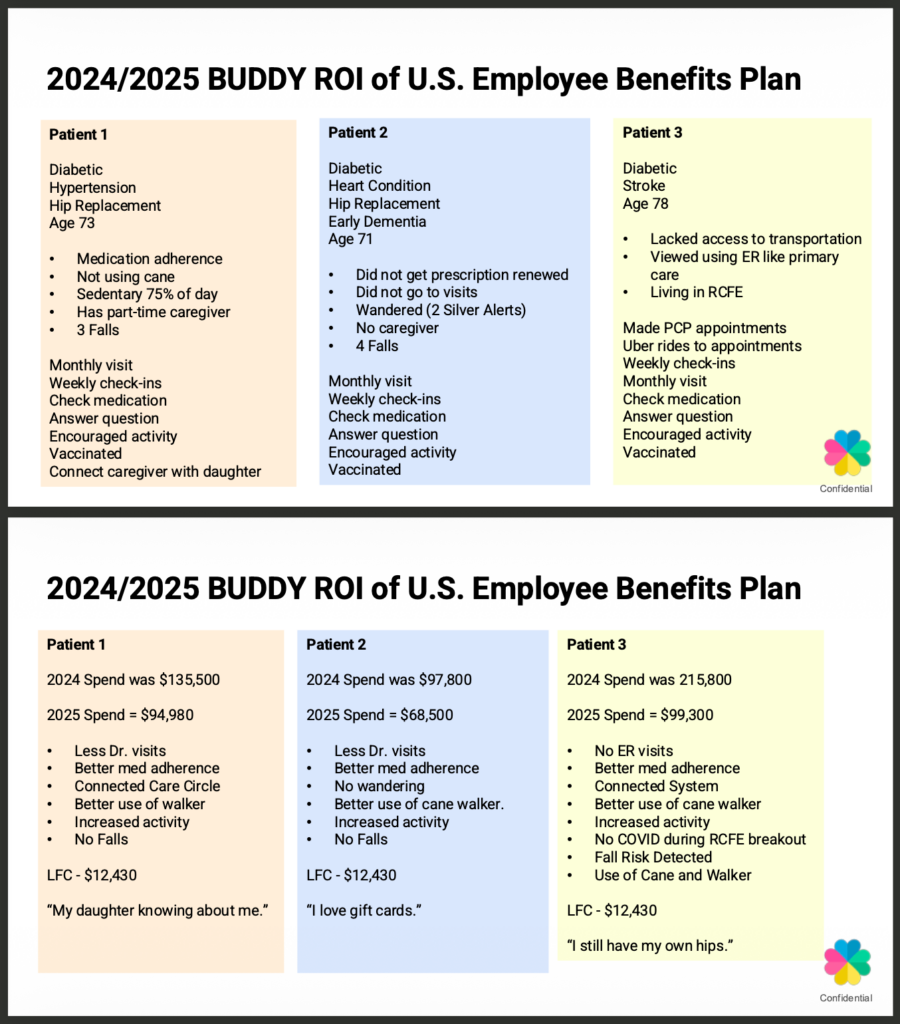
- 2024-2025 BUDDY ROI of U.S. Employee Benefits Plan:
- Employee Benefits Plan – Washington State
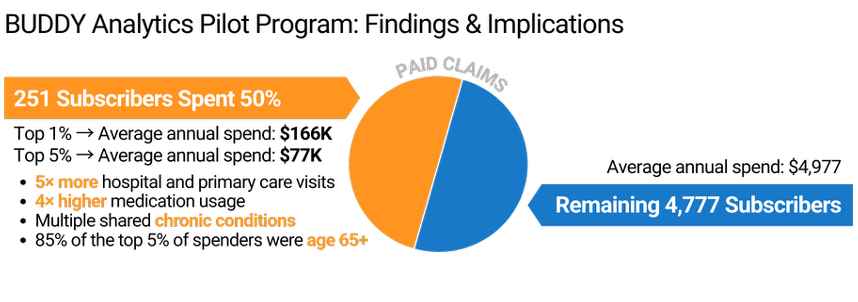
- 5,000 + users
- BUDDY by LiveFreely took top 5% of the plan spenders, who represented almost 50% of all spending
- BUDDY Process:
- Initial Visit (SOC) – Introduction, Set-up
- Personalized Health Program
- Concierge Service (minimum weekly touches)
- BUDDY
- Gamification
Partners & Beneficiaries
LiveFreely’s expansion into Japan is occurring in collaboration with:
- Senior care facilities and community organizations
- Institutional and municipal partners
- Japanese sports teams, sponsors, and fans
Timeline & Milestones
Future Directions: Applying Japan Learnings to the U.S. Market
Japan is not the end goal – it is a catalyst.
The United States faces its own accelerating aging crisis. Falls are the #1 cause of injury and death at home for seniors, 30% of the population spend at least 19 hours per week caring for a senior loved one, and 55% take the wrong medications or forget to take medications completely, all serious issues that amount to a $200 billion per year problem. By 2030, all baby boomers will be aged 65+. Like Japan, the U.S. system remains largely reactive.
Insights from Japan will directly inform LiveFreely’s U.S. strategy in several ways:
- Predictive analytics: strengthening AI models with diverse, longitudinal datasets
- Product design: refining continuous, real-time monitoring to maximize accuracy and engagement
- Healthcare integration: translating successful partnership and deployment models into U.S. care ecosystems
Conclusion: Leading the Future of Proactive Aging™
LiveFreely’s launch in Japan marks a pivotal moment for the future of Proactive Aging™. By combining rigorous need-finding, research-grounded gait analysis, and AI-powered risk prediction, BUDDY by LiveFreely is a trailblazer in transforming reactive care to proactive interventions at scale.
Japan offers a powerful lens into the future. The lessons learned in Japan will shape healthcare strategies as aging populations rise to the point where more effective, intentional, and humane technologies are required to meet the need.